 My 2026 Conference and Free webinars!
 Musical Physical Educator Tips for Better Classroom Management in PE
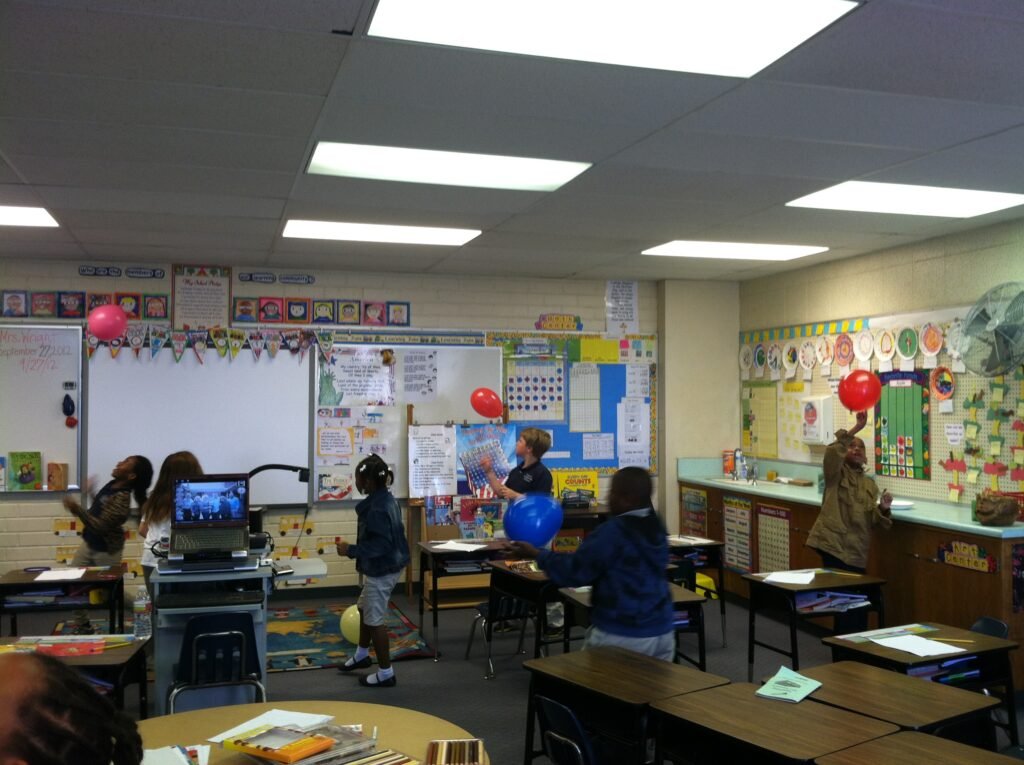
Managing a physical education class can feel like controlled chaos—students are moving, talking, and full of energy. But what if that energy could be guided instead of controlled?
That’s where becoming a musical physical educator makes a powerful difference.
Experts like Carrie Flint emphasize that music is not just for fun—it’s a strategic teaching tool that can improve classroom management, increase engagement, and create a more structured learning environment.
Why Music is a Game-Changer in PE Management
In Physical Education, teachers often face unique challenges—large groups, shared spaces, and constant movement.
Music helps solve these challenges by providing:
- Clear structure and timing
- Predictable routines
- Built-in engagement
- Non-verbal communication cues
When students move with rhythm, they are more focused, coordinated, and responsive.
Carrie Flint’s approach shows that music can be used to manage time, reinforce lesson objectives, and create a positive learning environment—not just to entertain.
Tip 1: Use Music as a Start-and-Stop Signal
One of the simplest and most effective classroom management strategies is using music as a cue.
- Music ON → Students move
- Music OFF → Students freeze and listen
This eliminates the need to constantly raise your voice or repeat instructions.
In music-based teaching, non-verbal cues like rhythm and sound are often more effective than verbal commands in gaining attention and control.
Tip 2: Match Music to Movement
A key principle of being a musical physical educator is aligning music with the lesson goal.
For example:
- Fast tempo → Running, jumping, cardio activities
- Slow tempo → Stretching, balance, yoga
- Steady beat → Skill practice (dribbling, stepping, coordination)
Carrie Flint highlights that matching songs with activities helps reinforce movement patterns and learning objectives, making lessons more effective.
Tip 3: Build Predictable Routines with Music
Students thrive in structured environments where they know what to expect.
Music can help create consistent routines in PE:
- Warm-up song to start every class
- Transition music between activities
- Cool-down music to end the lesson
These routines reduce confusion, improve behavior, and make transitions smoother—one of the biggest classroom management challenges in PE.
Tip 4: Use Rhythm for Non-Verbal Communication
Instead of shouting instructions across a noisy gym, use rhythm-based signals:
- Clapping patterns
- Call-and-response beats
- Hand signals with rhythm
For example:
“If you can hear me, clap once… twice… three times.”
These techniques are widely used in music education because they quickly regain student attention without interrupting the flow of the lesson.
Tip 5: Keep Students Actively Engaged
One of the biggest causes of misbehavior in Physical Education is downtime.
Carrie Flint’s strategies focus on keeping students actively involved with doable, engaging activities that minimize waiting and maximize participation.
Music naturally supports this by:
- Maintaining energy levels
- Encouraging continuous movement
- Reducing off-task behavior
When students are engaged, behavior issues decrease significantly.
Tip 6: Create a Positive Emotional Environment
Music influences mood. Upbeat songs create excitement, while calm music promotes relaxation and focus.
A musical PE environment helps students:
- Feel more confident
- Enjoy movement
- Associate Physical Education with positive experiences
Carrie Flint emphasizes that PE should support the mind, body, and spirit of all students, making emotional engagement just as important as physical activity.
Tip 7: Reinforce Expectations Through Music
Music can also help reinforce rules and expectations.
For example:
- Specific songs for clean-up time
- Rhythm cues for lining up
- Movement songs that include directions
Instead of repeating instructions, the music becomes the reminder.
This creates a classroom where students respond automatically to structure, improving overall management.
The Musical PE Mindset
Being a musical physical educator is not about adding music randomly—it’s about using it intentionally.
Carrie Flint’s philosophy focuses on:
- Practical, easy-to-implement strategies
- Active engagement for all students
- Structured yet fun learning environments
When music is used with purpose, it transforms physical education from chaotic movement into organized, meaningful activity.
The Bottom Line
Music and rhythm are powerful tools for improving classroom management in PE.
By using music to:
- Structure lessons
- Signal transitions
- Engage students
- Reinforce expectations
Teachers can create a physical education environment that is focused, inclusive, and enjoyable for every student.
In the end, great classroom management in PE isn’t about controlling energy—it’s about directing it.