 My 2026 Conference and Free webinars!
 Using Music to Improve Student Engagement in Physical Education
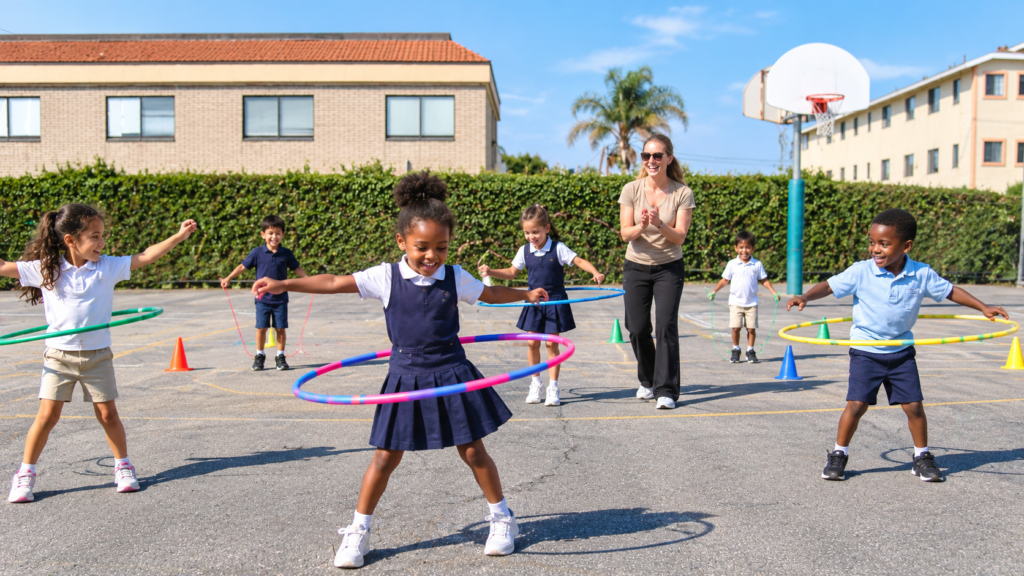
Physical Education should be an active, positive, and meaningful experience for every student. However, keeping children motivated and involved throughout a PE lesson can sometimes be challenging. Students have different abilities, interests, confidence levels, and learning needs, so teachers need creative strategies that encourage everyone to participate. One powerful tool that can help is music.
For Carrie Flint, music and movement are important parts of creating engaging Physical Education experiences. As a longtime physical educator, professional development presenter, and National SHAPE America Trainer, Carrie Flint focuses on helping educators use movement, music, and meaningful learning to create positive environments where students can participate and learn.
Why Music Works in Physical Education
Music naturally adds rhythm, energy, and enjoyment to movement. When carefully selected, it can encourage students to become more involved in activities and help make PE lessons feel exciting and purposeful.
Carrie Flint’s professional development topic, “Mindfully Using Music in Physical Education,” emphasizes that music is not simply background entertainment. Her approach focuses on selecting music thoughtfully to enhance fitness, movement, gross and fine motor skills, and social-emotional experiences.
This means teachers can choose music according to the purpose of the activity rather than simply playing a song while students exercise.
Connect Music With Movement
Music can be incorporated into many different PE activities. Students can listen to the rhythm and change their movements according to the beat, tempo, or musical cues.
For example, teachers can use music during:
- Warm-up and stretching activities
- Locomotor movement practice
- Gross motor skill activities
- Fitness challenges
- Dance and rhythm activities
- Brain breaks
- Equipment or station transitions
- Cool-down exercises
These activities allow students to move while also practicing listening, coordination, balance, timing, and body awareness.
Carrie Flint’s website describes her Musical PE resources as activities paired with music to help students get up, move, and learn. These resources can also be used as brain breaks in classroom settings.
Music Can Increase Student Participation
Not every student feels confident participating in traditional PE activities. Some children may be hesitant to compete, while others may need additional encouragement or different ways to experience success.
Music can create a less intimidating environment by shifting attention toward movement, rhythm, and participation. Students can perform movements at their own ability level while still being part of the same activity.
This connects with Carrie Flint’s broader philosophy that quality Physical Education should provide positive experiences for all students. Her professional background includes both general and adapted Physical Education, giving her experience working with students across different ages, abilities, and learning environments.
Use Music to Support Active Learning
Physical Education can also support learning beyond physical fitness. Music and movement can be connected with academic concepts, creating opportunities for students to learn through multiple senses.
Teachers can incorporate counting, directions, patterns, rhythm, spatial awareness, and vocabulary into movement activities. Students may listen for a particular cue and respond with a specific movement, helping them practice both physical and cognitive skills.
Carrie Flint’s professional development work includes active learning and cross-curricular activities, with an emphasis on connecting movement and academics. Her website notes that students learn best when they are fully engaged and that movement can support academic learning.
Make Classroom Management More Engaging
Music can also become a useful part of PE classroom management. Instead of relying only on repeated verbal instructions, teachers can establish musical cues for different routines.
For example, one song can signal the beginning of a warm-up, another can indicate a transition between stations, and a short musical cue can let students know it is time to gather equipment or return to their designated area.
Carrie Flint’s work specifically connects music and movement with student behavior, engagement, and positive learning environments. Her seminars include strategies designed to help teachers create engaging lessons while supporting effective class management.
Choose Music Mindfully
Using music effectively does not mean that music needs to play constantly throughout a PE lesson. The key is intentional use.
Teachers should consider the age of their students, the purpose of the activity, the pace of movement, and the learning objective when choosing music. The music should support the lesson rather than distract students from it.
A carefully selected song can provide a rhythm for movement, create a transition signal, encourage participation, or reinforce a particular skill. This is the central idea behind Carrie Flint’s focus on mindfully using music in Physical Education.
Create Positive Experiences Through Music and Movement
Carrie Flint’s work is built around the idea that Physical Education should address the whole child—the mind, body, and spirit. Her website emphasizes the value of quality PE for physical fitness as well as mental and emotional well-being.
Music can support this goal by making movement more enjoyable, helping students feel involved, and providing teachers with another creative way to deliver instruction.
By thoughtfully combining music with movement, educators can create PE lessons that are active, structured, inclusive, and meaningful. Whether it is a warm-up, skill activity, brain break, or transition, music can help students get moving while remaining connected to the learning experience.
For educators looking for practical ways to increase engagement in Physical Education, Carrie Flint’s Musical PE approach offers valuable ideas for bringing music, movement, and meaningful learning together. Her resources and professional development programs are designed to help educators create positive learning experiences that encourage students to participate, learn, and enjoy being active.