 My 2026 Conference and Free webinars!
 The Power of Music and Movement in Physical Education for Student Engagement
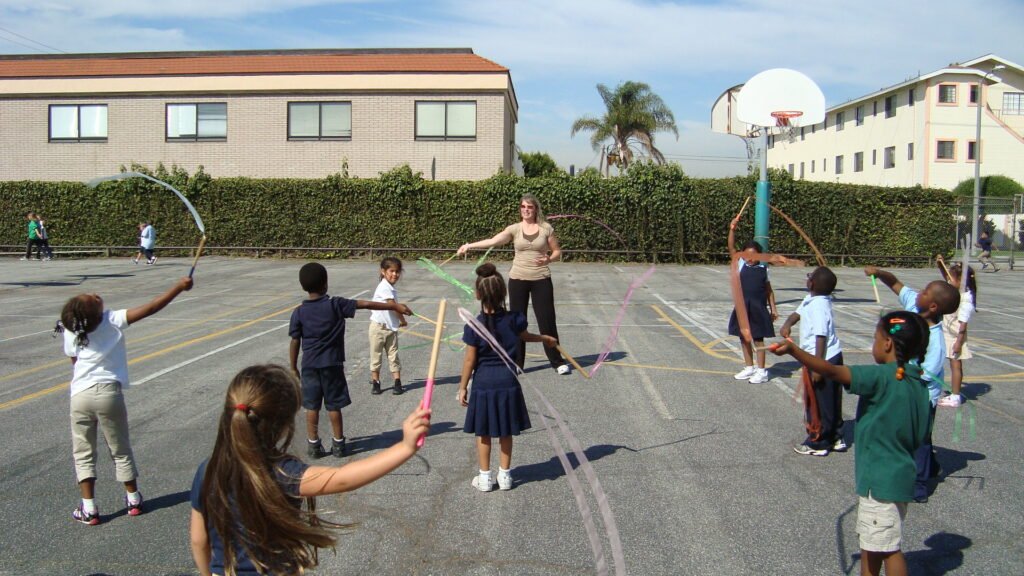
Student engagement is one of the biggest challenges—and opportunities—in today’s Physical Education classes. With diverse learning styles, varying energy levels, and increasing classroom demands, PE teachers need strategies that are both effective and easy to implement.
One of the most powerful tools available? Music and movement.
Educators like Carrie Flint emphasize that when music is used intentionally in physical education, it can transform the way students participate, behave, and learn. Rather than being just a fun addition, music becomes a purposeful teaching strategy that supports engagement, structure, and skill development.
Why Music and Movement Matter in PE
Children are naturally wired to respond to rhythm. When music is introduced into Physical Education, it creates an immediate connection that draws students into the activity.
Music and movement in physical education help:
- Capture student attention quickly
- Increase motivation to participate
- Improve focus and listening skills
- Support coordination and timing
When students are actively engaged, they are more likely to stay on task, follow directions, and enjoy the learning process.
Turning Energy into Engagement
PE classes are full of energy—but without direction, that energy can lead to off-task behavior.
Music provides structure. It gives students a clear rhythm to follow and a purpose for their movement. Instead of random activity, students begin to move with intention.
Carrie Flint’s teaching approach highlights the importance of structured, engaging activities that keep students involved and reduce behavior issues. Music naturally supports this by guiding movement and maintaining a consistent pace throughout the lesson.
Music as a Teaching Tool, Not Just Background Noise
A common mistake is using music only as background entertainment. In effective physical education programs, music is used strategically.
Teachers can use music to:
- Signal the start and end of activities
- Guide the speed and intensity of movement
- Reinforce lesson objectives
- Create smooth transitions between activities
For example:
- Fast-paced songs can energize cardio activities
- Slow, steady rhythms can support balance and stretching
- Stop-and-go music can build listening skills and self-control
When used this way, music becomes an essential part of instruction.
Supporting Different Learning Styles
Every classroom includes students who learn in different ways. Some students respond best to visual cues, others to verbal instructions, and many to auditory and kinesthetic experiences.
Music and movement in physical education:
- Support auditory learners through rhythm and sound
- Engage kinesthetic learners through active participation
- Help students remember patterns and sequences
By combining music with movement, teachers create a multi-sensory learning environment that benefits all students.
Improving Classroom Management Through Engagement
One of the most effective ways to manage a PE class is to keep students engaged.
When students are:
- Moving consistently
- Focused on rhythm
- Actively participating
There is less opportunity for misbehavior.
Carrie Flint’s strategies often focus on reducing downtime and maximizing participation, which are key elements of strong classroom management. Music helps achieve both by keeping the class flowing smoothly.
Simple Ways to Use Music and Movement in PE
You don’t need complex routines or special equipment to get started. Simple strategies can have a big impact.
1. Start with a Movement Warm-Up
Use an upbeat song to get students moving at the beginning of class.
2. Add Music to Skill Practice
Have students practice skills like jumping, skipping, or balancing to a steady beat.
3. Use Freeze Games
Play music while students move, and have them freeze when it stops. This builds listening skills and self-control.
4. Incorporate Brain Breaks
Short music-based breaks can help reset focus during longer lessons.
5. End with a calm, cool-down.
Use slow music for stretching and relaxation to help students transition out of the activity.
Creating a Positive PE Experience
Music doesn’t just improve engagement—it also shapes how students feel about physical education.
When PE classes are:
- Fun
- Structured
- Inclusive
Students begin to associate movement with positive experiences.
Carrie Flint’s philosophy emphasizes teaching the whole child—mind, body, and spirit. Music supports this by creating an environment where students feel comfortable, confident, and excited to participate.
The Bottom Line
The power of music and movement in physical education lies in its ability to turn ordinary lessons into engaging, meaningful experiences.
By using music intentionally, teachers can:
- Increase student engagement
- Improve classroom management
- Support skill development
- Create a positive learning environment
In the end, physical education is not just about movement—it’s about helping students develop a lifelong love for being active.